
On this page 10 sections
- Choose your logistics model first
- The licence you need: NIPOST courier licensing
- What it costs to start a dispatch business
- How the numbers work per bike
- Own bikes, partner riders or vans?
- How to get your first customers
- The systems that keep a logistics business profitable
- What usually goes wrong
- Frequently Asked Questions
- Before you buy the first bike
Ask any Instagram vendor what frustrates them most and delivery will come up quickly. Riders who don’t pick up when they said they would. Parcels that arrive a day late. Cash collected on delivery that takes a week to come back. Online stores, pharmacies, restaurants and offices in every Nigerian city need things moved across town, and most would happily pay a courier they can rely on.
That gap is the opportunity. Getting into it properly means sorting out a NIPOST licence, knowing what each bike really costs you every month, and signing a few regular customers before you spend on equipment. For how logistics compares with other ideas, see our guide to profitable businesses in Nigeria.
Prices checked November 2026. Key prices link to their sources.
Choose your logistics model first
People use the word logistics for several quite different businesses, and the capital and rules change with each one.
Last-mile dispatch moves parcels, documents and food within a city, usually by motorcycle. It is the cheapest to start and the focus of this guide. Interstate parcel delivery moves goods between cities, often by van or through partnerships with established transport companies. Haulage moves bulk goods by truck and needs far more capital. Freight forwarding, shipping and customs clearing handle imports and exports. They are licensed separately by the Nigeria Customs Service and, as we explain below, can carry much higher share capital requirements at CAC.
Most people start with last-mile dispatch in one city, then add interstate delivery once merchants ask for it. Decide which one you are building before you spend, because it changes your licence, your vehicles and your customers.
The licence you need: NIPOST courier licensing
Courier, dispatch and delivery businesses are licensed by the Nigerian Postal Service through its Courier and Logistics Regulatory Department. Licence fees depend on how widely you operate. A December 2025 guide lists these tiers:
- State or SME licence: ₦250,000, renewable at ₦100,000
- Regional licence: ₦2 million
- National licence: ₦3 million
- International licence: ₦20 million
- Application fee: ₦20,000
Fees change, so confirm them with NIPOST before you apply. And don’t assume nobody checks. In Edo State, NIPOST closed five courier offices and seized seven delivery motorcycles, and its courier division warned that unlicensed operators face arrest and prosecution under the NIPOST Act and its 2024 regulatory guidelines.
You will usually need a registered business before NIPOST will process your application, so register with CAC first. Our comparison of a business name and a limited company explains which structure suits a logistics firm, especially if you plan to sign contracts with larger companies.
Watch the share capital CAC asks for
This catches a lot of people out. CAC sets higher minimum share capital for some logistics activities, and you usually find out only when your application is queried. We have seen it ourselves in 2026: a company registered as a shipping business with ₦2 million share capital was queried and asked to raise it to ₦25 million before CAC would proceed. Published lists of sector minimums show the same ₦25 million for shipping companies and agents, and ₦5 million for freight forwarding.
We have not seen a minimum like this applied to last-mile dispatch or courier companies. From what we have seen, the query depends on the business activity you choose and sometimes on words in the company name, such as “shipping”. So describe your business accurately. If you run local dispatch, your activity is courier and delivery services. If you plan to move goods by sea or handle imports, budget for the higher share capital from the start rather than waiting for a query to stall your registration.
State rules on motorcycles
Some states restrict commercial motorcycles on certain roads. Lagos bans them from major highways, bridges and parts of Victoria Island, Ikoyi and Lagos Island, and officials seized 65 motorcycles in Ikoyi in February 2026. Courier riders are also expected to carry NIPOST documents. Check your state transport ministry’s rules before you plan routes, and price deliveries into restricted areas differently.
Insurance
Every motorcycle on the road needs third-party insurance. NAICOM set the minimum third-party premium for motorcycles at ₦3,000 from 2023. Ask an insurer about goods-in-transit cover as well, because merchants will ask who pays when a parcel is lost or damaged.
What it costs to start a dispatch business
Here is what a two-bike start typically includes, using prices checked in November 2026. Treat it as a planning guide and get your own quotes.
| Item | Estimate |
|---|---|
| CAC registration | ₦21,000 in CAC charges for a business name (about ₦30,000 to ₦35,000 with an agent), or from ₦11,000 in CAC charges for a company with ₦1 million share capital |
| NIPOST state licence and application fee | ₦270,000 |
| Two delivery motorcycles | about ₦400,000 to ₦650,000 each (late 2025 prices) |
| Delivery boxes, helmets and reflective gear | ₦60,000 to ₦100,000 (our estimate) |
| Two smartphones, if riders cannot use their own | ₦120,000 to ₦160,000 each |
| Third-party insurance, two bikes | ₦6,000 |
| Working capital: two riders, fuel and maintenance for two months | ₦780,000 to ₦1 million |
Add those up and a realistic two-bike start comes to roughly ₦2 million to ₦3 million, depending mainly on bike prices and how much working capital you keep. Our national guide compares this with other businesses. You can start with less by working with riders who own their bikes, which we cover below.
How the numbers work per bike
Profit in dispatch comes down to how many paid deliveries each rider completes a day. Here is an illustration for one salaried rider on your bike in Lagos. Your figures will differ.
Monthly costs: rider salary of about ₦125,000, fuel of about ₦70,000 (around 100km a day at ₦1,350 to ₦1,430 a litre), maintenance of about ₦25,000 and phone data of about ₦5,000. That is roughly ₦225,000 a month per bike before office costs, marketing or your own salary.
Revenue: Lagos dispatch fees for small parcels commonly range from about ₦2,500 to ₦8,000 depending on distance and route. At an average of ₦3,000, a rider must complete about 75 paid deliveries a month, roughly three a day, just to cover their own costs. At eight deliveries a day over 24 working days, the bike brings in about ₦576,000, leaving around ₦350,000 towards overheads and profit.
A rider sitting under a tree waiting for the phone to ring still costs you the full day’s pay. What makes the numbers work is batching: one trip to a regular merchant’s shop that picks up five or six parcels at once. Random one-off deliveries across town rarely pay.
Own bikes, partner riders or vans?
Your own bikes and salaried riders give you control over service quality and branding, but you carry the cost of idle days, repairs and theft.
Riders who own their bikes, paid per delivery or on commission, cut your startup cost to little more than your licence, registration and marketing. Many new dispatch businesses start this way. The trade-off is less control, so you need clear service rules and a simple way to track who delivered what.
Vans and tricycles suit bulky goods, interstate routes and areas where motorcycles are restricted. They cost far more, so add them once regular customers need them.
How to get your first customers
Win contracts before you buy bikes. Your best early customers send parcels every day: online stores selling on Instagram and WhatsApp, pharmacies, restaurants, laundries and small manufacturers.
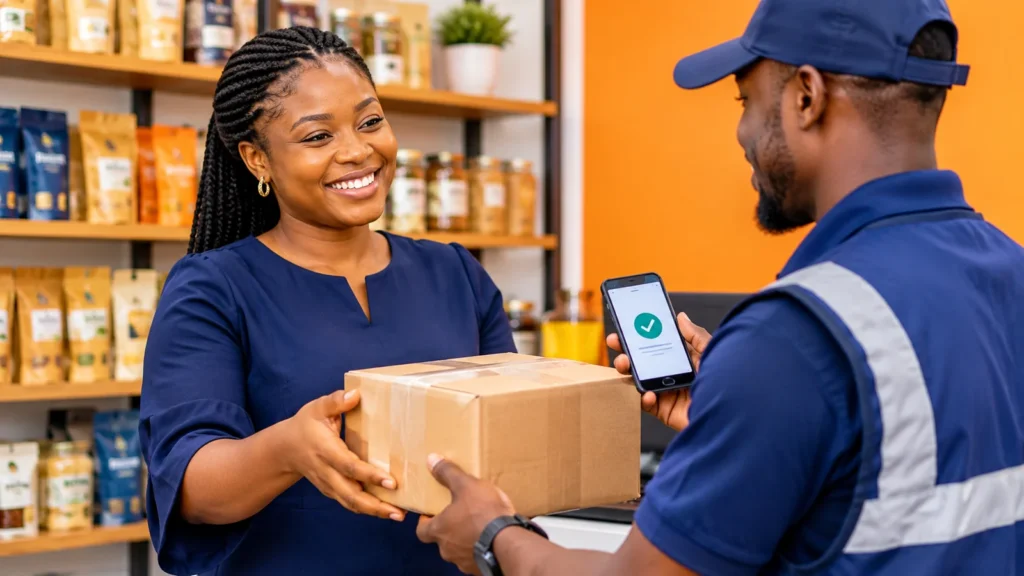
Approach them with clear zone pricing, a pickup schedule and a written service promise covering delivery times, what happens if a parcel is lost, and how quickly you send cash-on-delivery money back. Late or missing cash-on-delivery remittances end more merchant relationships than late deliveries do, so settle within an agreed window, such as 24 to 48 hours, and send a statement each time.
Keep your first area small. If you can do Ikeja and Surulere well, or Wuse and Garki, merchants in those areas will recommend you to each other. Trying to cover the whole city with two riders usually means doing it badly everywhere.
The systems that keep a logistics business profitable
Once you handle more than a few dozen deliveries a day, WhatsApp messages and notebooks stop working. Merchants want to request pickups without calling, customers want to know where their parcel is, and you need proof of delivery and a clear record of cash collected.
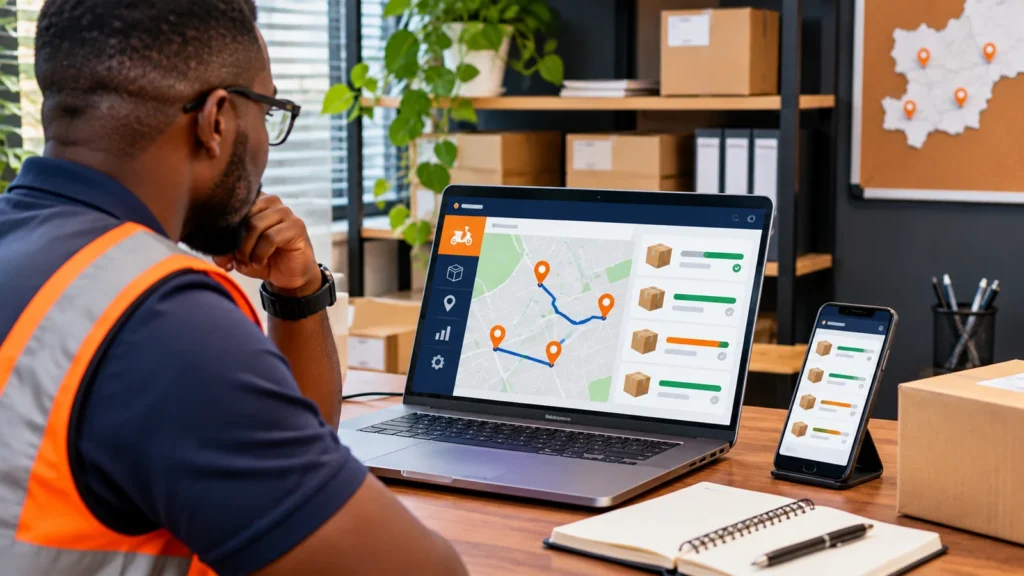
That is when a proper website and booking system pays for itself: pickup request forms, delivery tracking, merchant accounts and cash-on-delivery reconciliation. Our guides to logistics website design and what to check before hiring a logistics website developer explain what to build first.
What usually goes wrong
Riders leave. A good one will go to whoever pays more or pays on time, so make sure that is you, and keep a second rider you can call on short notice.
Bikes get stolen and riders have accidents. Insure every bike, fit a tracker, and don’t let anyone ride without a helmet, however short the trip.
Cash on delivery is where most disputes start. Count it every evening, match it against the day’s deliveries, and pay merchants on the day you promised.
Fuel moves without warning. Petrol prices have swung sharply this year, so look at your delivery fees every quarter rather than once a year. And diarise your NIPOST renewal, because operating on an expired licence puts the whole business at risk.
Frequently Asked Questions
Do I need a NIPOST licence to run a dispatch business?
Yes. Courier, dispatch and delivery operators are licensed by NIPOST’s Courier and Logistics Regulatory Department. A December 2025 guide lists ₦250,000 for a state or SME licence plus a ₦20,000 application fee. Confirm current fees with NIPOST before you apply.
How much does it cost to start a dispatch business in Nigeria?
By our estimate, a two-bike start with the state licence, gear and two months of working capital costs roughly ₦2 million to ₦3 million. Working with riders who own their bikes can cut that to little more than your licence, registration and marketing.
How much do dispatch riders charge in Lagos?
Lagos dispatch fees for small parcels commonly range from about ₦2,500 to ₦8,000, depending on distance and whether the route crosses between the Mainland and the Island.
Is a logistics business profitable in Nigeria?
It can be, if your riders stay busy. In our illustration, a salaried rider costs about ₦225,000 a month, so at an average fee of ₦3,000 each bike needs about three paid deliveries a day just to break even. Regular merchant contracts make the difference.
Should I register a business name or a limited company for logistics?
A business name is enough to start, but a limited company is better if you plan to sign contracts with larger companies or expand across states. Our business name versus limited company guide explains the difference.
Before you buy the first bike
Decide whether you are doing last-mile dispatch, interstate delivery or both. Register the business, apply for the NIPOST licence that matches where you will operate, and get at least three or four merchants to agree to try you. Then buy the bikes. When you are ready, Qrafteq can handle your CAC registration and build the website merchants use to book you.