


On this page 12 sections
- Start by explaining what your business needs the website to do
- How do you assess a developer’s portfolio?
- What should a logistics website proposal include?
- Be specific about tracking, bookings and quotations
- Who will prepare the text and images?
- Are domain registration and hosting included?
- How will you know the website is ready to launch?
- What should happen after handover?
- Will the developer help customers find the website?
- What warning signs should you look out for?
- Prepare a short brief before making your decision
- Choose a developer who can explain the work clearly
You have decided that your logistics business needs a proper website. Maybe you have never had one, or the current one no longer reflects the kind of work you do.
Someone recommends a developer. You look at a few websites they have designed, the presentation looks good, and you are almost ready to proceed.
But before you do, there are a few things worth understanding.
When choosing a logistics website developer in Nigeria, look at their relevant work, how well they understand your operations, what their proposal includes, and what happens after the website is handed over. The design matters, of course. So does the process behind the buttons your customers will be clicking.
For example, a customer submits a freight enquiry. Where does it go? Who receives it? Does it contain enough information for your team to respond?
These are the details you want to discuss before the project starts.
Start by explaining what your business needs the website to do
You do not need to arrive with technical specifications. You do need to explain how your business works.
Do you handle dispatch within Lagos? Interstate deliveries? International freight? Are your main customers individuals sending parcels, online sellers or companies moving goods regularly?
Your answers should shape the discussion.
For example, a freight forwarder may want better enquiries from importers. A courier serving online stores may want merchants to submit delivery requests without sending several WhatsApp messages.
Both need a website, but the work involved is different.
A useful opening brief could be:
“We handle air and sea freight for businesses importing into Nigeria. We want customers to understand our services and submit shipment details so our team can prepare a quotation.”
That gives the developer something practical to work with. You can discuss the layout and colours after establishing the job the website needs to do.
How do you assess a developer’s portfolio?
Ask to see working websites and, where possible, examples involving logistics or similar service businesses.
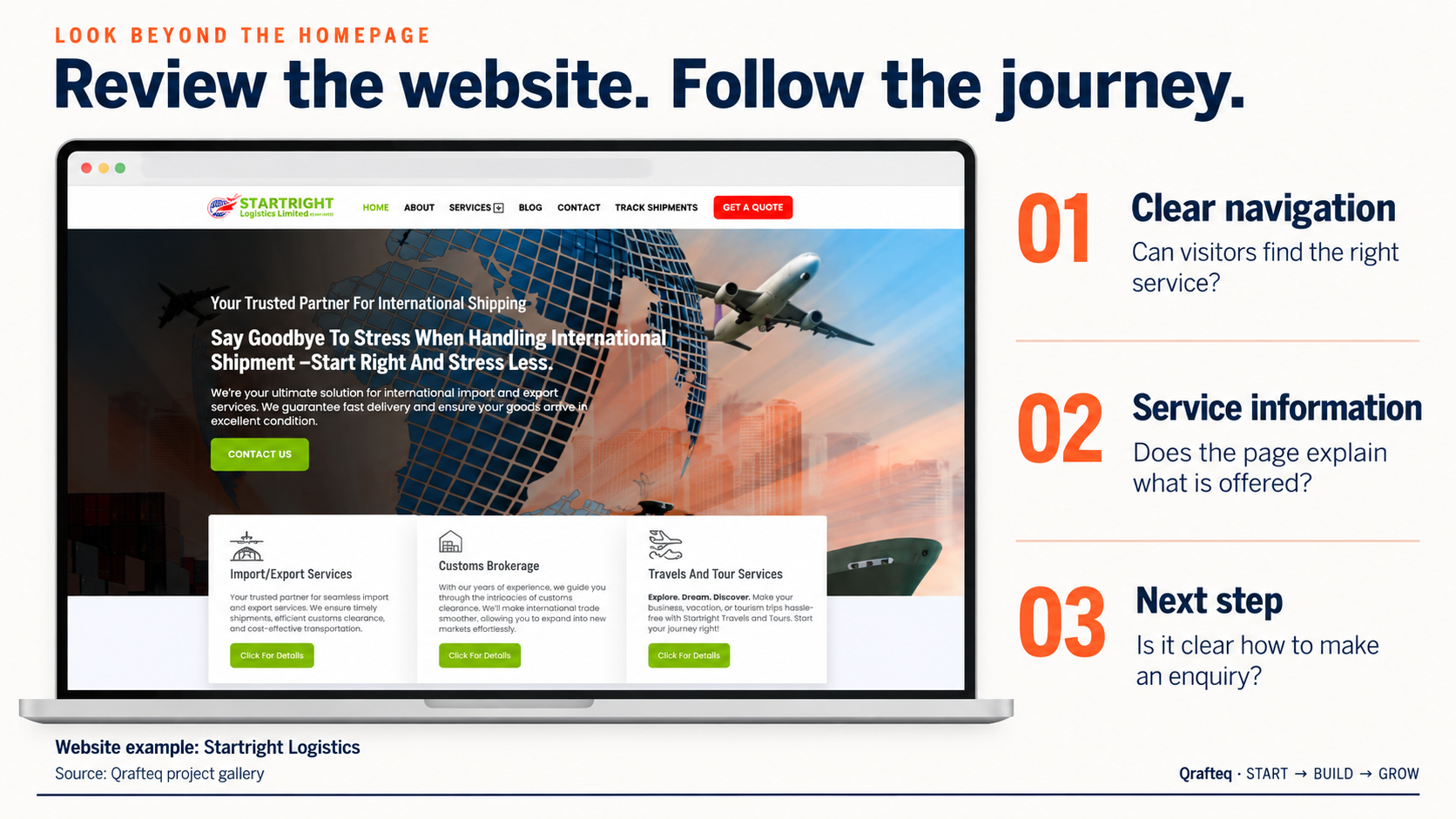
Then look beyond the homepage.
Open a service page. Try the navigation on your phone. Check whether the next step is clear. You do not have to submit an enquiry to someone else’s business to assess whether the process makes sense.
Ask the developer what they actually handled on each project. Was it the design, the development, the content, an integration or a combination?
This is especially useful where several people worked on the same website.
Does the developer need previous logistics experience?
Relevant experience helps, but it should not be the only consideration.
A developer who has built quotation processes, customer portals or service websites may have transferable experience. What matters is whether they can understand your requirements and demonstrate the ability to deliver them.
Ask them to explain a decision from a previous project.
Why was the enquiry form structured that way? Why did they recommend a particular booking process? What could the client’s team manage after handover?
Their explanation can tell you more than a gallery of attractive screenshots.
What should a logistics website proposal include?
You should be able to read the proposal and explain to someone on your team what you are getting. If it leaves you guessing about the pages, features or responsibilities, ask for those details before proceeding.
Start with the reason for the project. If you want better freight enquiries, the proposal should explain which service pages will be created and how customers will submit their shipment details. It should also say who prepares the text and images. Otherwise, you could approve the design and discover later that everyone is waiting for content nobody agreed to write.
Any connection to your existing software needs to be named and explained. What information will pass between the systems, and who will provide access? A phrase such as “logistics integration” is too broad to tell you what will actually work.
You also need to understand how the project will move towards launch. Agree on when you will review the work, how the forms and other functions will be tested, and how customers will use them on a phone. The proposal should explain what counts as completed work, which accounts and instructions you receive at handover, and what support follows.
If something important was discussed on a call, make sure it appears in the written scope. That includes the small things. If your staff need to edit delivery zones themselves, for example, write that down as a requirement. It is much easier to settle these details while both sides are still planning the work.
Be specific about tracking, bookings and quotations
Some features sound straightforward until both sides explain what they mean. You say “shipment tracking,” and you may be imagining customers viewing updates on your website. The developer may be proposing a button that opens another company’s tracking portal.
Both approaches can be useful, depending on your business. Ask which one is included. If the tracking stays on your website, find out whether your staff will enter updates or whether the information will come from your shipment software. Someone still has to supply those updates.
The same applies to quotations. A form that collects cargo details for your team is different from a tool that calculates a price immediately. If you expect an instant quote, the developer needs to understand your pricing rules and what should happen when a shipment falls outside them.
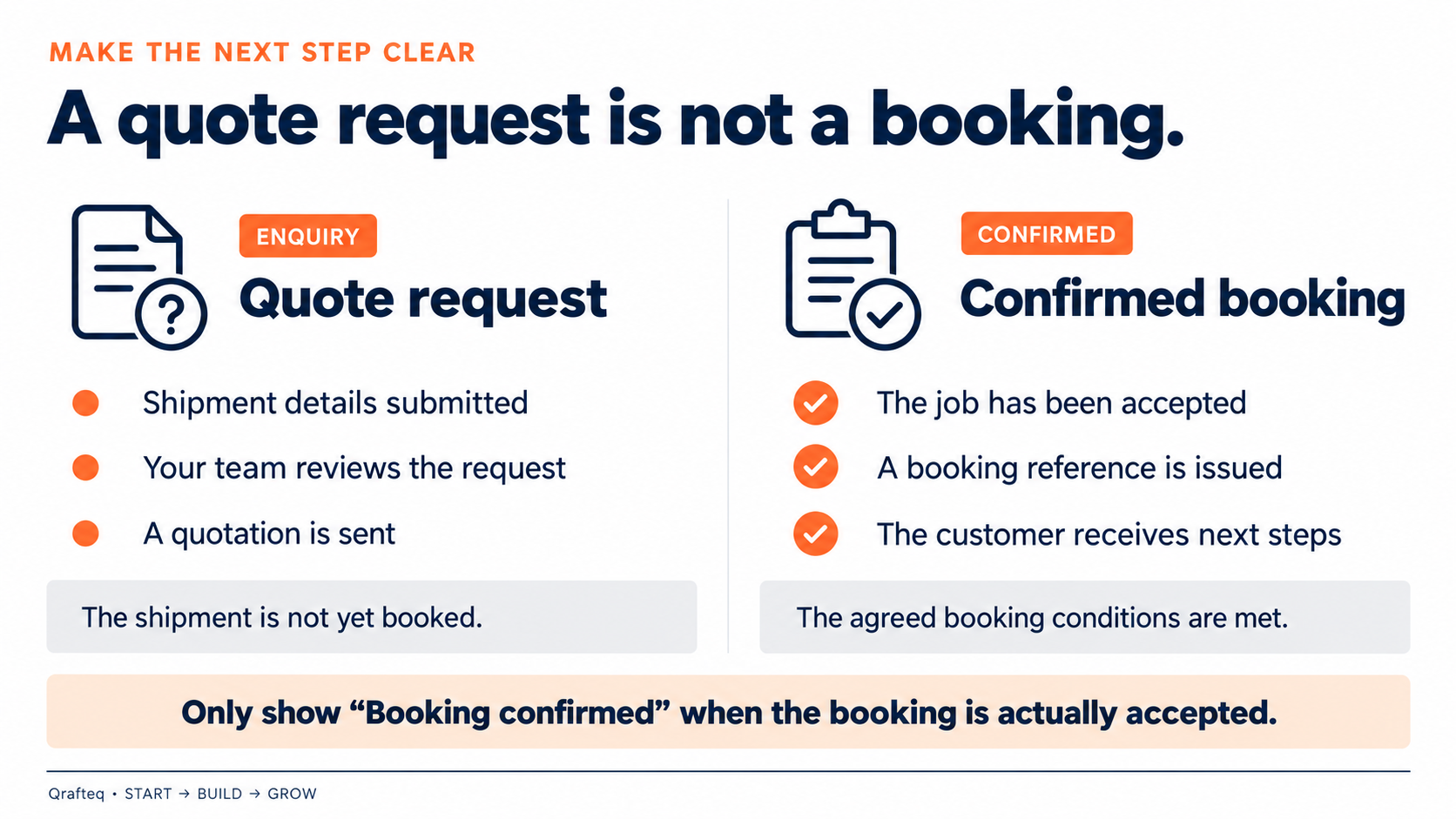
Then walk through the booking process together. A customer might submit shipment details, your team receives a notification, and someone reviews the job before sending a quotation. The customer accepts it and receives payment instructions. If that is how you operate, the website should follow that sequence. Showing “Booking confirmed” immediately after submission would give the customer the wrong impression.
If customer accounts are included, ask what customers can actually do after logging in. Can they view previous shipments, download documents or submit another request? A login screen on its own tells you very little about what has been built.
For payments, ask how a successful transaction will be matched to the right shipment and what happens if payment fails or remains pending. A demonstration or a simple walkthrough can make these details easier to understand before you commit to the project.
What if you already use logistics software?
Bring that into the conversation early.
Share the name of the system and explain what you use it for. The developer can then establish whether an integration is available, what access is required and whether the software provider imposes any conditions.
Do not assume that two systems can connect simply because both operate online.
Any unconfirmed integration should be identified as something to investigate before it becomes a delivery promise.
Who will prepare the text and images?
This is one of those details that can appear minor at the beginning and become a major delay later.
A developer asks for your content. You assumed writing was included. They assumed you would provide finished text.
Now the project has started, but nobody has prepared the service descriptions.
Agree on this before proceeding.
Will the developer interview you and write the pages? Will they edit your company profile? Or will they upload material your team has already prepared?
The same applies to images. Decide whether you will supply photographs, arrange a shoot or use properly licensed stock images where appropriate.
Use actual company photographs when presenting your team, premises or fleet. A stock photograph can illustrate freight transport, but it should not suggest that you own the vehicles or facilities shown.
Your website should make the business look credible while remaining accurate.
Are domain registration and hosting included?
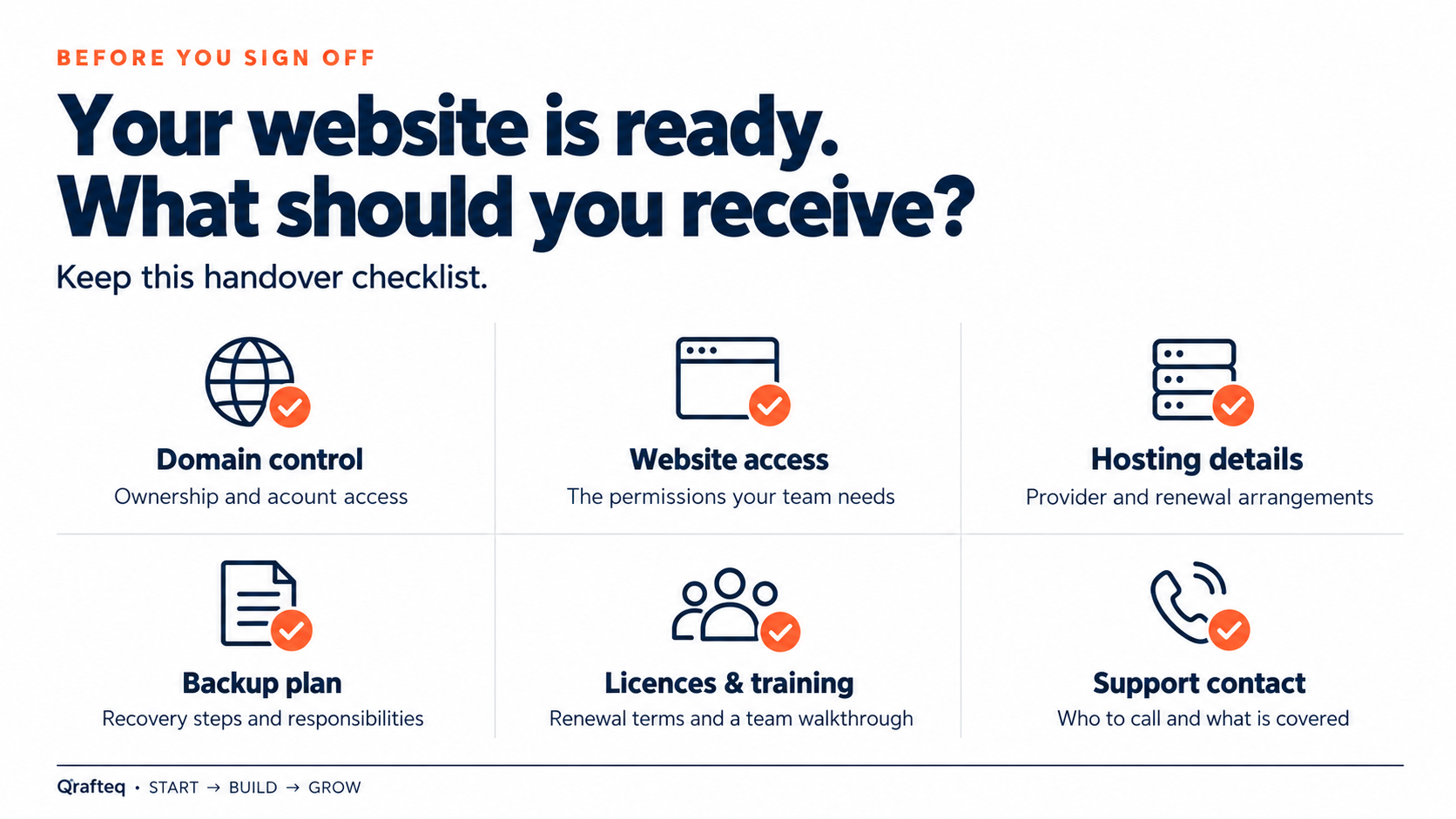
Do not assume that they are. Ask the developer to state whether domain registration, hosting and business email form part of the proposal, the period covered and what happens at renewal.
It is also worth asking a practical question: if you decide to work with another developer later, what will you have access to?
Your domain should be registered for your business, with documented ownership or control and a way to recover access. Find out who holds the hosting account, who manages it and how a move to another provider would be handled. If business email is included, confirm where the mailboxes are hosted and whether changing the website hosting would affect them.
For the website itself, agree on the access your team will receive and what staff can manage after handover. If you expect to update service descriptions or delivery areas yourself, ask the developer to show you how that will work.
Backups deserve a clear answer too. Ask what is being backed up, how often and who would restore the website if something went wrong. “We do backups” does not tell you whether your latest enquiries or content changes would be recoverable.
Finally, check any software licences used on the site. Some may belong to your business; others may be covered by the developer’s subscription. You need to know what happens to updates, support and any affected features if that arrangement ends.
You may prefer the developer to manage all of this. That is fine. The important thing is understanding the arrangement while you can still discuss it calmly, rather than trying to recover an account when something has stopped working.
How will you know the website is ready to launch?
Agree on what you will test before the final review.
Looking through the pages is part of it, but the functions need checking too.
If the website includes an enquiry form, submit a test request and confirm that the right person receives it. Check that the information is complete and that the customer sees an appropriate confirmation.
If it includes tracking, use an authorised test record. Check what happens when the reference is valid, when it is incorrect and when information is unavailable.
For booking and payment features, agree on suitable tests with the developer. Include unsuccessful and incomplete attempts, not only the ideal path.
Also use the website on your phone. Can you read the information, complete the fields and reach the submit button without another element covering it?
These checks help establish whether the agreed work is ready for real customers.
What should happen after handover?
Your team should know how to use the parts of the website they will manage.
That might mean editing service information, updating shipment statuses, checking enquiries or changing coverage details.
Ask for instructions suited to your staff. A short recorded walkthrough may be more useful than a technical document nobody understands.
Clarify the support arrangement as well.
There is a difference between correcting an issue in the delivered work, maintaining the website and adding a new feature. Your agreement should explain how each is handled.
If an enquiry form stops delivering messages after launch, you should already know who to contact and what support applies.
Will the developer help customers find the website?
Ask what search-engine work is included, rather than accepting “SEO-ready” as a complete answer. A developer can make that claim without explaining the work behind it. So ask them to show what their search engine optimisation setup actually covers.
The proposal might cover page titles, headings, internal links, indexability checks and measurement setup. Ongoing content, local search work and advertising may be separate services.
The same clarity applies to lead tracking.
Can you tell when someone submits a quotation request? Can you distinguish that from someone who only clicks a WhatsApp button? How will your team record which enquiries become customers?
A website gives your business somewhere to receive and develop interest. You still need a plan for bringing relevant visitors to it and following up on their enquiries.
What warning signs should you look out for?
Be cautious when the developer agrees to every feature without asking how your business operates.
Other concerns include a proposal with no clear deliverables, unexplained ownership arrangements, no testing process or promises of guaranteed sales.
A responsible developer may ask difficult questions. They may explain that a requested integration needs investigation, or that a feature will require your staff to maintain information.
That is useful. You want those questions raised while there is still time to make a sensible decision.
You should also expect clarity about changes. If you add a customer portal halfway through a company-website project, the scope and timeline may need to change. Agree on how those requests will be assessed.
Prepare a short brief before making your decision
You do not need a lengthy document. A clear summary can make the first conversation much more productive.
Include:
- The logistics services you provide and the locations you serve.
- The customers you most want to attract.
- Your existing website and software, if any.
- The problems customers or staff currently experience.
- What visitors should be able to do on the new website.
- Who will supply content and approve the work.
- Any required launch date and the reason behind it.
Separate what you need at launch from what you may introduce later.
That gives you a practical basis for comparing proposals and helps the developer recommend a suitable approach.
Choose a developer who can explain the work clearly
You should come away from the discussion understanding what will be built, how your customers will use it and what your team will need to manage.
The website’s appearance matters. So do its service information, enquiry process, ownership arrangements and support.
At Qrafteq, we help businesses develop websites around their services and customer journeys. Our portfolio includes logistics and freight-related projects you can review as part of your decision.
If you are planning a new logistics website, or your current one is no longer doing its job, tell us about your business.
We can discuss what needs to work better and the scope required to get there.