
On this page 6 sections
Last week, a client sent Qrafteq an invoice her company had been using for three years. Clean design. Good colours. Not one CAC-required detail on it. No RC number. No director names. If she had sent that invoice out on August 2, she would have been in breach of the law.
On August 1, 2026, the Corporate Affairs Commission began strict enforcement of Sections 304(1), 304(2), and 729(1)(c) of the Companies and Allied Matters Act (CAMA) 2020. These sections govern what must appear on every business letter, invoice, quotation, receipt, and official document your registered company sends out.
This has been law since 2020. What changed is enforcement. CAC says non-compliant companies will now face sanctions, and they are not giving a long grace period.
If your letterhead, invoice template, or quotation format has not been touched in years, this affects you directly. Here is exactly what the law demands, why CAC is enforcing it now, and how to fix your documents this week.
What the Law Actually Requires
Under Section 304 of CAMA 2020, every registered company must state the following, in legible characters, on its business letters and official documents:
Section 729(1)(c) extends this obligation beyond letterheads. Your company name and RC number must also appear on invoices, receipts, official notices, and advertisements, not just correspondence. If it is a document that represents your company to the outside world, it needs to carry these details.
One thing many business owners miss: this applies whether your “letterhead” is a printed sheet, a PDF invoice template, or an HTML email signature. The law does not care about the format. It cares whether the information is there.
Why CAC Is Enforcing This Now
This is not an isolated move. It fits a pattern you have probably felt elsewhere this year: the PSC crackdown, the annual returns strike-off batches, the digital automation of CAC’s entire compliance system. CAC has spent the last two years closing every gap between what the law says and what companies actually do.
Business letter compliance serves the same goal as PSC disclosure: traceability. When your invoice carries your RC number and real director names, anyone dealing with your company, a bank, a court, a supplier, a customer, can verify who they are actually doing business with. That is the point. Nigeria has been under pressure to prove exactly this kind of corporate transparency, and CAC is closing every avenue where a company could hide behind a name with no accountability attached.
What Happens If You Ignore It
CAC’s public notice is direct: failure to comply attracts sanctions under the Act. The exact penalty schedule for this specific provision has not been published with fixed naira figures the way annual return penalties have, but that is not a reason to relax. CAC’s pattern over the past two years has been to announce enforcement, give a short compliance window, then act, sometimes retroactively.
Beyond the legal risk, there is a practical one. An invoice with no RC number and no director names looks unofficial. Banks, government agencies, and larger corporate clients increasingly check this before they release payment or sign a contract. Non-compliant paperwork can quietly cost you deals long before CAC ever gets involved.
How to Audit Your Business Documents This Week
Step 1: Pull Every Template You Use
Letterhead, invoice, quotation, receipt, proposal cover page, even your email signature if it doubles as official correspondence. List every document type your company sends to the outside world.
Step 2: Cross-Check Your Director List Against CAC Records
Before you print anything, confirm your current CAC records are accurate. If a director resigned last year and you never filed the change, fix that first. Listing a director who is no longer with the company, or missing one who joined, creates a mismatch CAC can flag independently of the letterhead issue itself.
Step 3: Add the Five Required Details
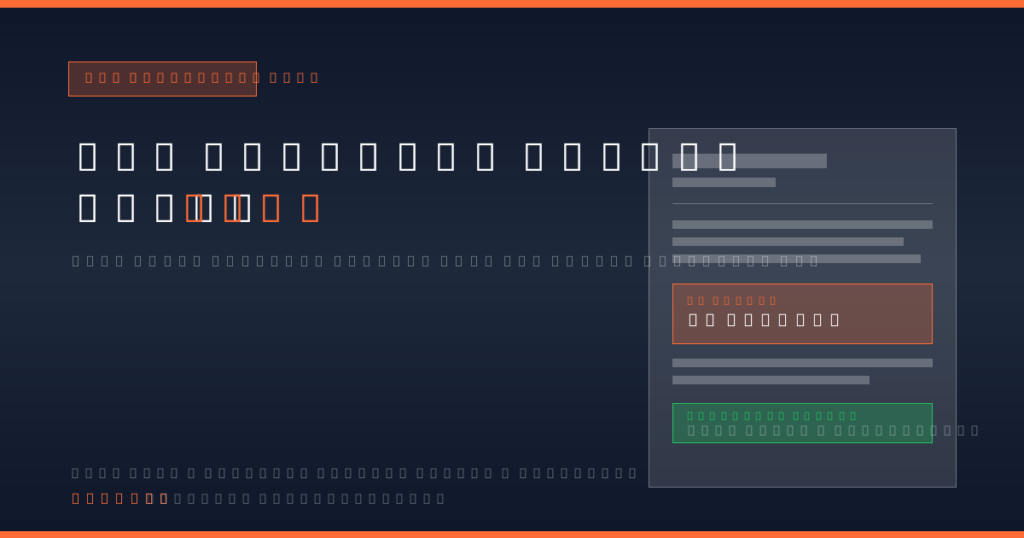
Registered name, RC number, current director names, former names where applicable, nationality of any foreign director. All five, every time, on every qualifying document.
Step 4: Redesign Without Cluttering Your Brand
This is usually where business owners get stuck. Cramming five pieces of compliance text onto a clean invoice can wreck the design if it is not handled properly. A footer strip in a smaller weight of your brand font, separated from the main content, usually solves this without disrupting how the document looks.
Step 5: Update Every Digital Version Too
Your accounting software invoice template, your WhatsApp Business catalogue, your Word and Elementor letterhead files, your PDF quotation generator. If it produces a document a client receives, it needs updating. Missing the paper version but leaving the digital one outdated defeats the purpose.
.
At Qrafteq, this is exactly where brand identity work and CAC compliance meet. We redesign letterheads, invoices, and quotation templates so they carry every required detail under CAMA 2020 while still looking like a properly branded Nigerian company, not a document assembled in a panic.
Contact us for a free review of your current business documents. We will tell you exactly what is missing and fix it without touching the parts of your brand that already work.
Related Resources from Qrafteq
Final Word: Fix It Before It Costs You
This is one of the easiest CAC requirements to fix and one of the easiest to ignore, because nobody chases you for it the way they chase annual returns. That is exactly why so many companies will still be non-compliant six months from now.
Do this today: pull up your invoice template, check it against the five requirements above, and fix what is missing. It takes less time than reading this article took.
Need your letterhead, invoice, or quotation templates redesigned to meet CAMA 2020 requirements without losing your brand? Talk to Qrafteq. We handle the compliance and the design in one pass.