
On this page 12 sections
- Start with the kind of travel business you run
- Which pages should a travel agency website have?
- Make each package page useful before asking for a deposit
- What makes a travel agency website credible?
- Do you need an online booking engine immediately?
- What should the travel enquiry form ask?
- Can WhatsApp remain the main sales channel?
- How should payments and confirmation work?
- Will the website work properly on a phone?
- How will the right travellers find you?
- What should you agree with the website developer?
- Build the first version around the bookings you can handle
Does your travel agency need online booking, or a better way to receive enquiries? That decision should come before the design.
If your team checks fares and discusses options before accepting payment, the website should support that process. Start with what your agency can reliably handle, then choose the features around it.
Start with the kind of travel business you run
An agency arranging family holidays has a different conversation from one managing corporate travel. Someone planning a honeymoon may want help choosing a destination. A company booking staff travel may need itinerary changes, approval steps and a dependable contact when plans change.
Write down the services you handle yourself and those supplied through partners. Flights, hotel reservations, tours, airport transfers and visa application support should each have a clear place on the site if you offer them.
Then decide what you want visitors to do. Request flight options? Ask about a particular tour? Discuss a corporate travel arrangement? “Contact us” can work, but a more specific invitation helps people start the right conversation.
Which pages should a travel agency website have?
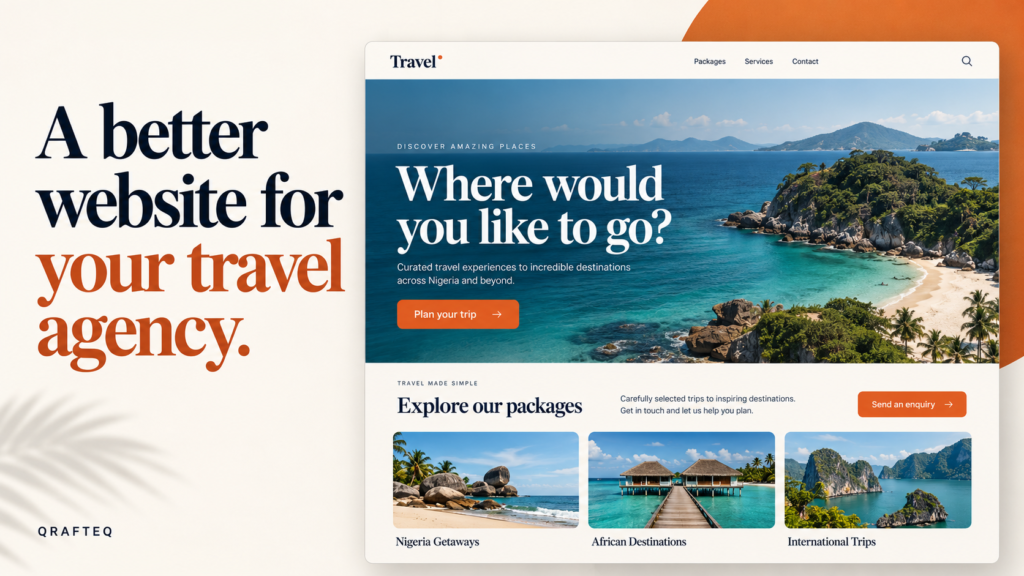
Your homepage should tell visitors what you arrange and who you serve. “Flights, hotel reservations and tailored holidays for travellers departing Nigeria” is a useful starting point if that accurately describes your agency. Follow it with routes into the main services, selected current offers and a clear way to speak with your team.
Give substantial services their own pages. A flight enquiry page should explain how you help customers compare options and what information you need. A corporate travel page should address business requirements such as travel coordination, changes and the support arrangements you genuinely provide.
Your about and contact pages need practical details: the business name, the people customers will deal with, genuine office information where applicable, working hours and reliable contact channels. If you work remotely, explain how consultations happen. Do not invent a walk-in office to make the company appear larger.
Keep booking terms, cancellation information and your privacy notice easy to find. Customers should be able to understand the arrangement before they send documents or pay.
Make each package page useful before asking for a deposit
A photograph can make someone want the holiday. The details help them decide whether the offer works for them.
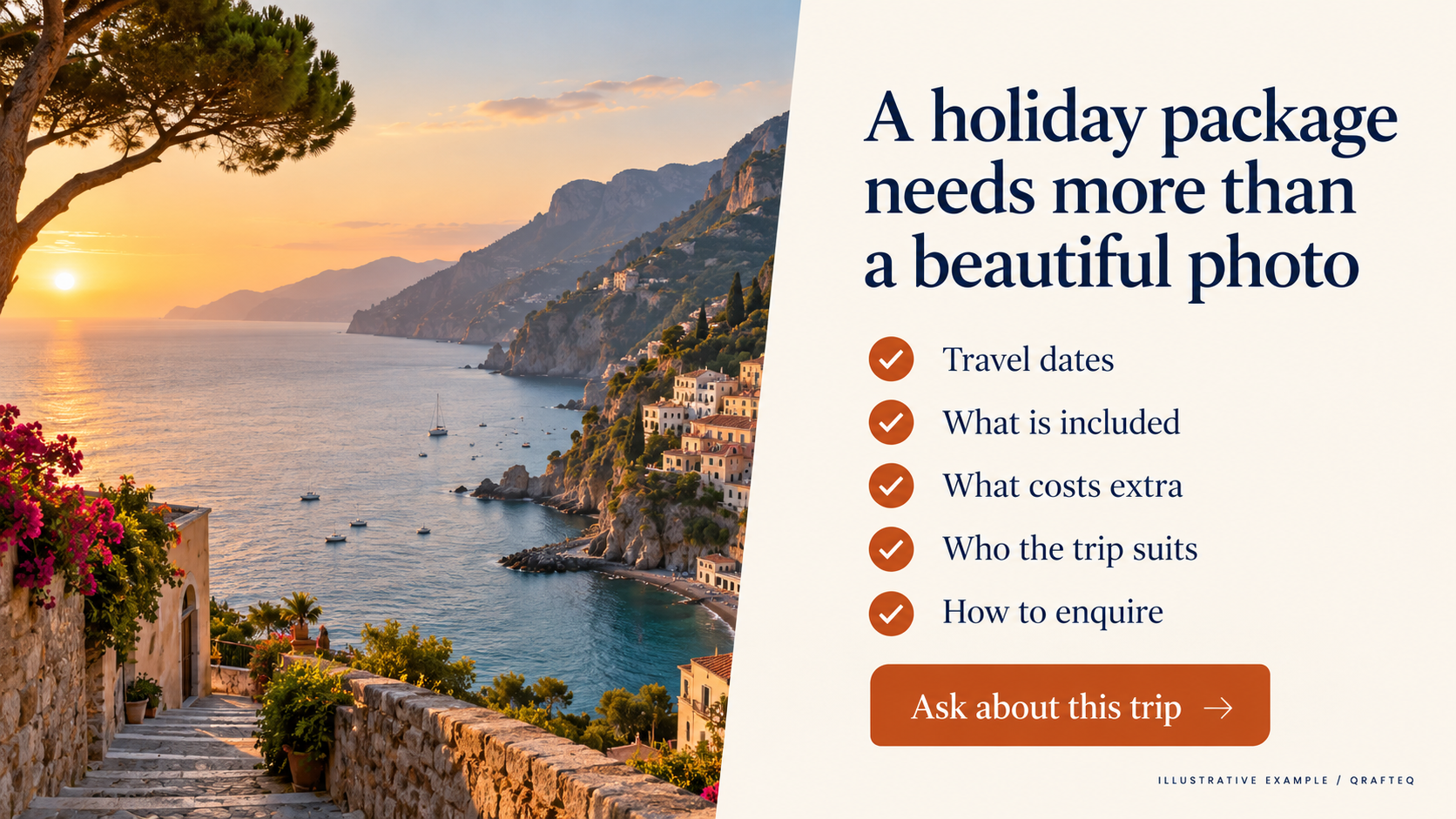
Explain the destination, travel dates or available period, length of stay and intended travellers. A family needs different details from a solo traveller joining a group tour. State the accommodation arrangement, transport, activities and meals included, where relevant.
Be equally clear about exclusions. If flights, airport transfers, entry tickets or visa-related charges are separate, say so beside the package information. Do not leave the customer to discover the missing items after a long WhatsApp conversation.
If you display a package price, explain its basis: per person or per group, the occupancy assumption, currency and validity conditions. Keep the offer current. An expired departure should not look bookable simply because nobody has updated the page.
Give each package its own enquiry button. The message reaching your team should identify the package, rather than opening a blank chat that starts with “Hello”.
What makes a travel agency website credible?
Show the business people will actually be dealing with. Real team photographs, accurate contact details and clear explanations of how you work are more useful than a row of impressive logos with no explanation.
Only display affiliations and accreditations you can substantiate, and describe partner arrangements accurately. Working with an accredited supplier is not the same as your agency holding that accreditation.
Use genuine customer reviews with permission. If you publish photographs from a group trip, make sure you have the right to use them. Stock or generated images can illustrate a destination or concept, but should not be presented as evidence of trips you organised.
For visa-support services, explain the assistance you provide and the limits of that service. Do not turn a marketing headline into a promise of approval. Keep destination-specific requirements linked to the relevant official sources and review them before relying on them for a customer’s application.
Do you need an online booking engine immediately?
Not every agency needs to launch with automated flight and hotel booking. If your team checks availability, prepares options and discusses the trip before accepting payment, a well-designed enquiry website can support that process.
An online booking engine becomes relevant when customers should be able to select available travel products and complete a supported reservation themselves. That requires more than putting a flight-search box on the homepage.
You need to establish where availability comes from, how prices are confirmed, who fulfils the booking and who handles changes afterwards. For example, Amadeus explains that its Self-Service flight-booking setup has production requirements and uses a consolidator for ticket issuance. It also distinguishes customer payment from settlement with the consolidator.
That is one provider’s arrangement, not a universal specification. Ask your own supplier to confirm what your agency can use and what the developer must connect. An attractive demonstration is not proof that those commercial arrangements are already in place.
Planning a website for your travel agency? Qrafteq can help you define the pages, package information and enquiry journey, then assess any booking integration with your chosen provider. Explore our website development service or discuss your travel agency website.
What should the travel enquiry form ask?
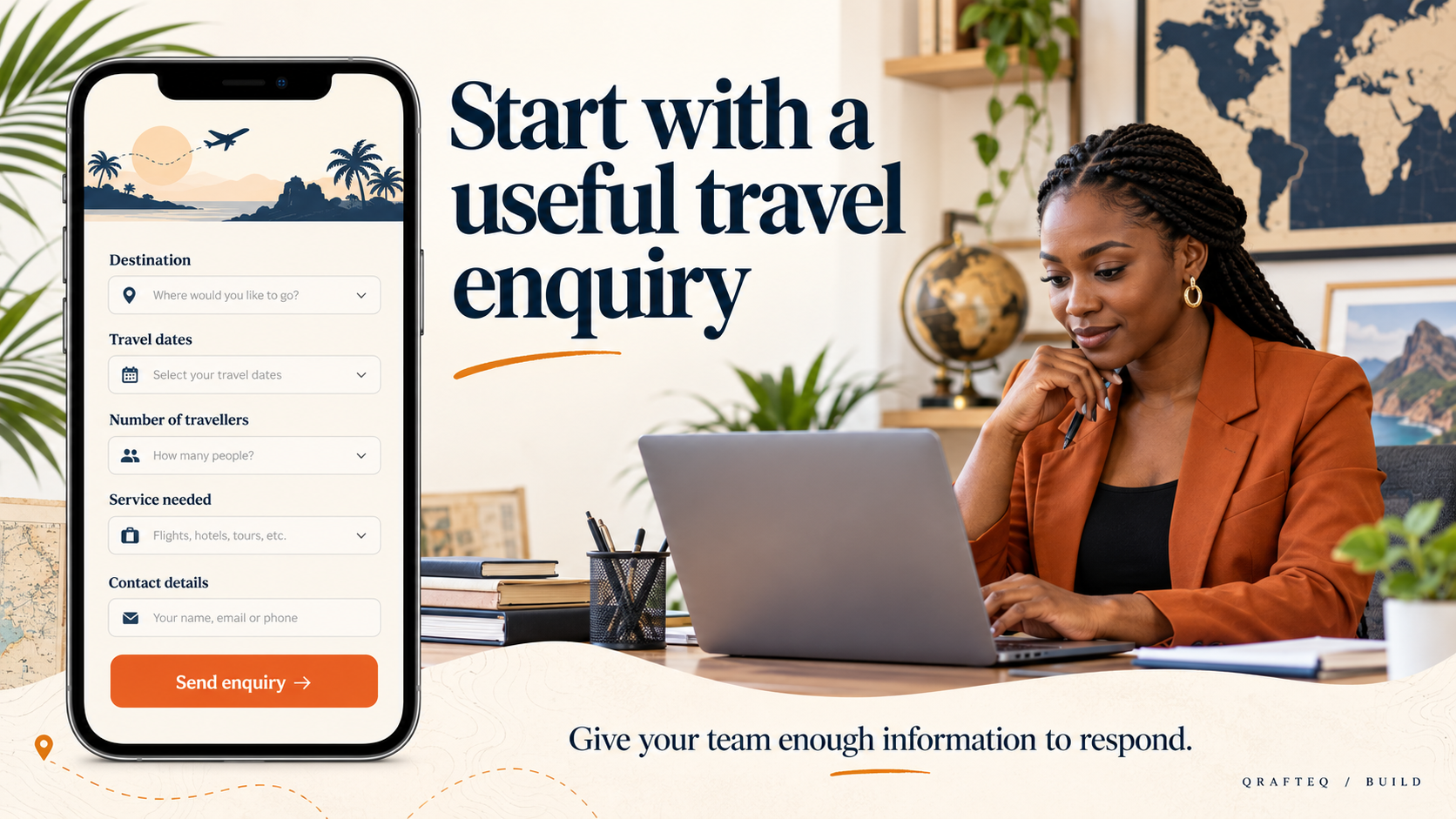
Start with the information your team needs for a useful first reply. For a flight enquiry, that usually means the departure city, destination, travel dates, number of travellers and a way to contact the person. Let them indicate whether their dates are flexible.
For a holiday package, carry the package name into the form and ask about the intended dates and group size. For a tailored trip, a budget range can help your team suggest realistic options. Explain why you are asking and allow uncertainty where appropriate.
Avoid asking for passport scans or detailed personal records at the first point of contact unless they are necessary for that step. When documents become necessary, provide an appropriate collection process and explain who will access them.
After submission, say that the enquiry has been received and explain the next step. Do not say “Booking confirmed” when a consultant still needs to check availability.
Can WhatsApp remain the main sales channel?
Yes. The website can prepare the conversation before the customer reaches WhatsApp. A visitor who has read the package details and identified their dates should not have to start again from nothing.
Use service-specific messages and preserve useful context when handing an enquiry to a consultant. Decide who monitors new messages and what happens when that person is unavailable.
Our guide to what happens after a website enquiry explains how to assign responsibility and keep a simple record. A WhatsApp click shows interest. It does not tell you whether a conversation happened or a booking was completed.
How should payments and confirmation work?
Agree the sequence before adding a payment button. If your agency must confirm a fare or supplier availability first, the website should support that check. Customers need to understand what they are paying for and what confirms the travel arrangement.
Explain deposits, remaining balances and applicable cancellation conditions before payment. Keep payment records connected to the correct customer and booking. For transfers, verify receipt through your business’s payment records rather than relying on an uploaded screenshot alone.
Ask the payment provider and booking supplier to confirm that the proposed setup supports your business, currencies and settlement requirements. Then test failed payments, interrupted confirmations and duplicate submissions. Someone on your team needs a clear way to resolve each situation.
Will the website work properly on a phone?
Test it as a traveller would. Open a package from a shared link, read the inclusions, choose dates and send an enquiry. Check whether the keyboard covers fields or whether a floating button blocks the next step.
Keep essential package information as readable page text rather than trapping it inside a promotional flyer. Use appropriately sized images, clear buttons and a manageable form. A beautiful desktop layout is not enough if choosing a return date on a phone becomes a struggle.
How will the right travellers find you?
Build useful pages around the services and trips you genuinely offer. Someone looking for group travel arrangements needs different information from someone asking about a particular holiday package. Give those subjects enough detail to justify their own pages.
Support them with articles based on questions your consultants regularly answer. Explain how to prepare a useful flight enquiry, what to check in a package or how your corporate travel process works. Review information that can change and link readers to relevant service pages.
Measure which enquiries become suitable prospects and which lead to completed bookings. That helps you decide where to improve the website and where advertising is worth testing. Qrafteq’s GROW services can support search-focused content, advertising and enquiry measurement once the website and follow-up process are ready.
What should you agree with the website developer?
Ask for a written scope covering the pages, content, package management, enquiry forms and any confirmed integrations. Establish who supplies photographs, who writes service descriptions and what your staff will be able to update.
Clarify domain ownership, hosting, business email, subscriptions and ongoing support. A simple enquiry website and a connected booking platform involve different work. Ask for a proposal based on your agency’s requirements, with third-party costs and recurring commitments explained.
Before launch, test a complete journey from a package page to the consultant receiving the enquiry. If online booking is included, test the full supported booking and payment process with the supplier. Agree who receives support requests after handover.
Build the first version around the bookings you can handle
Your agency may need clearer service pages and a dependable enquiry process before it needs a complex booking platform. Another agency may already have the supplier access and operational team to support a connected system.
Start with how you serve travellers today, identify where the process becomes difficult and build the website around that. You can add more when the business is ready to manage it.
At Qrafteq, we help businesses turn those requirements into a practical website scope. Review our website projects, then tell us about your travel agency and the enquiries you want to receive.