

On this page 9 sections
It often starts with a WhatsApp status. You post a photo of your jollof or your banga soup, a few colleagues ask if you can cook for them on Friday, and by the end of the month you have more orders than your kitchen can handle. People in every Nigerian city pay for food they don’t have time to cook, from office workers in Abuja to students in Nsukka.
Turning that into a business that actually pays you, rather than one that keeps you busy, comes down to how you price each plate, how you get food to customers and the food safety rules you can’t ignore. This guide covers all three. If you are in Lagos, our Lagos business ideas guide has a full cost breakdown for a Lagos food delivery start-up.
Prices checked November 2026. Key prices link to their sources.
Three ways to run a food delivery business
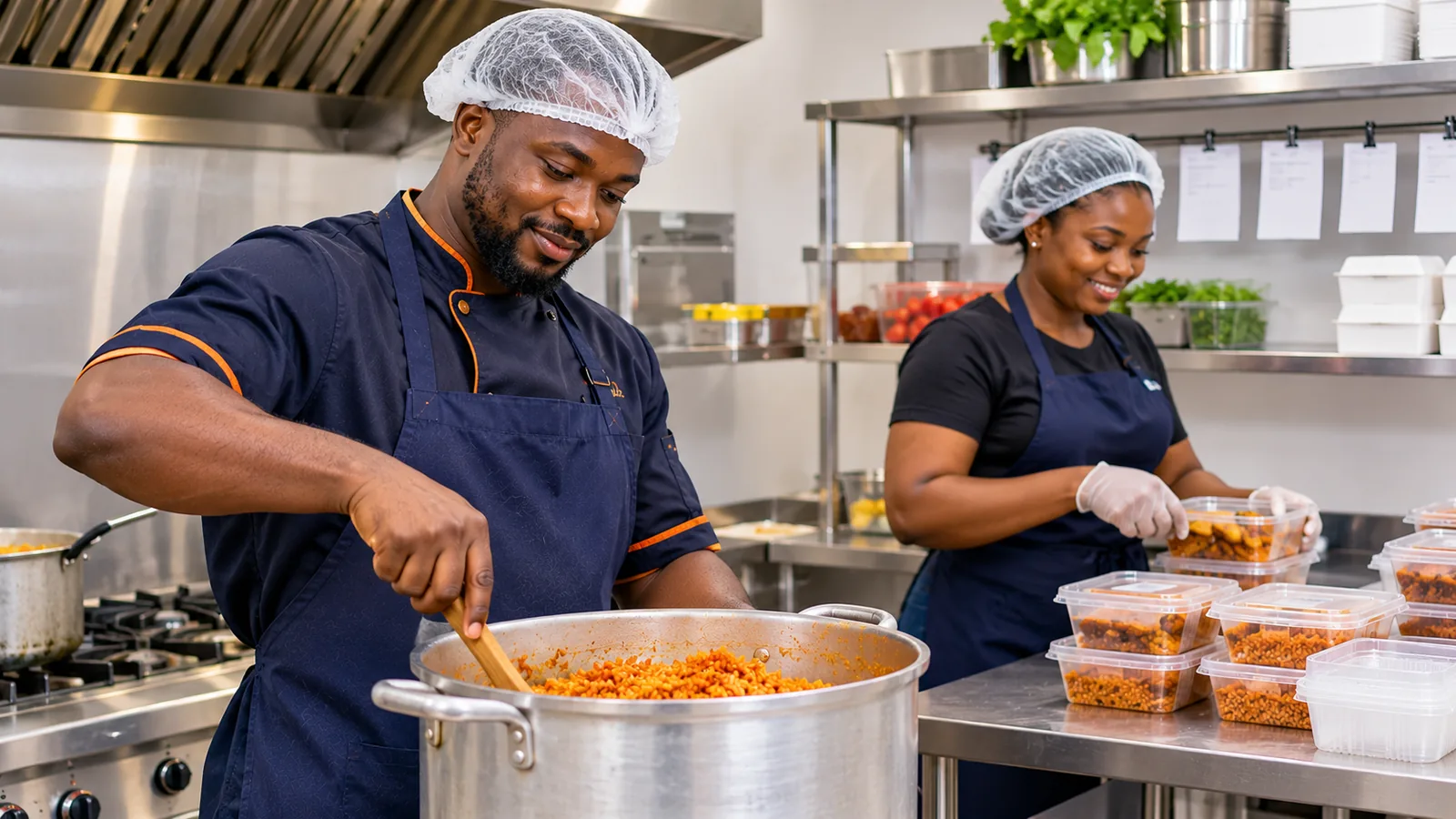
A home kitchen with your own rider is how most people start. You cook, take orders on WhatsApp and pay one rider to deliver. It costs the least, but you are limited by your kitchen and your own hours.
A delivery-only kitchen, sometimes called a cloud kitchen, is a small rented space set up just for cooking orders, with no seats for customers. It lets you cook more and hire help without the cost of a full restaurant.
A restaurant or kitchen on delivery apps such as Chowdeck reaches customers who would never find your WhatsApp number. The apps handle delivery, but they take a commission on every order, which we will come to.
Many businesses mix these: their own customers order directly by WhatsApp, and new customers find them on an app.
What it costs to start
A lean start from home, cooking yourself with one rider, costs roughly ₦300,000 to ₦400,000 in most cities. The biggest items are your first stock of ingredients, a gas cylinder and refills, food warmers, packaging and the rider’s first month of pay.
Your costs depend on where you are. A 12.5kg gas refill averaged about ₦17,600 across Nigeria in September 2026, cheaper near the depots in Lagos and dearer in many inland states. In October 2026, a 50kg bag of rice was quoted at ₦50,000 to ₦75,000 in Kano, against ₦55,000 to ₦80,000 in Lagos and ₦58,000 to ₦85,000 in Abuja. A carton of frozen chicken laps cost about about ₦55,000 in Lagos, and plastic takeaway packs about about ₦150 each when bought by the hundred.
Keep two to three months of running costs aside. Orders are rarely steady in the first few weeks, but the rider, the gas and the rent are due anyway.
Price each plate so you are paid for your work
The most common mistake is pricing by what feels fair rather than what each plate costs. Here is an illustration for a plate of jollof rice and chicken sold for ₦2,500 outside Lagos. Your own figures will differ.
- Ingredients, including rice, chicken, oil, tomatoes and seasoning: about ₦1,000
- Packaging: about ₦150
- Gas and other kitchen costs: about ₦100
- Delivery, if you batch several orders in one trip: about ₦300
That leaves about ₦950 a plate. Sell 40 plates a day for 22 days and you have roughly ₦836,000 before rent, your helpers’ pay and your own salary. Many food businesses try to keep ingredients to about a third of the selling price, so if your ingredients cost ₦1,000, a price close to ₦3,000 gives you more room when prices rise again.
Food prices are still rising faster than other prices in Nigeria, so look at your costs every month. A menu price you set in January can be losing you money by April.
Delivery apps: reach versus margin
Delivery apps bring you customers you could not reach alone, but check the commission against your margin before you sign up. Chowdeck, for example, lists vendor commission tiers of 15%, 20% and 30%, with higher tiers giving you a wider free-delivery area for its subscribers.
On a ₦2,500 plate, a 20% commission is ₦500. In the illustration above, that takes your ₦950 margin down to about ₦450, and that is before you count the delivery cost you no longer pay. Some vendors set slightly higher prices on apps to cover the commission. Others use apps mainly to find new customers, then encourage them to order directly next time.
Food safety and permits
Cooked food carries more rules than most businesses, and enforcement is increasing. Your state’s environmental health or public health officers are the people to ask about permits and inspections, and many states expect food handlers to pass a medical screening. In the FCT, the administration announced mandatory hepatitis B and C screening for food handlers in 2025.
If you package food for shops or supermarkets, such as bottled zobo, chin chin or packaged spices, you will need NAFDAC registration before retailers will take it. Register your business with CAC as well, because offices and companies that order lunch for staff will usually ask for an invoice from a registered business.
How food businesses keep customers coming back
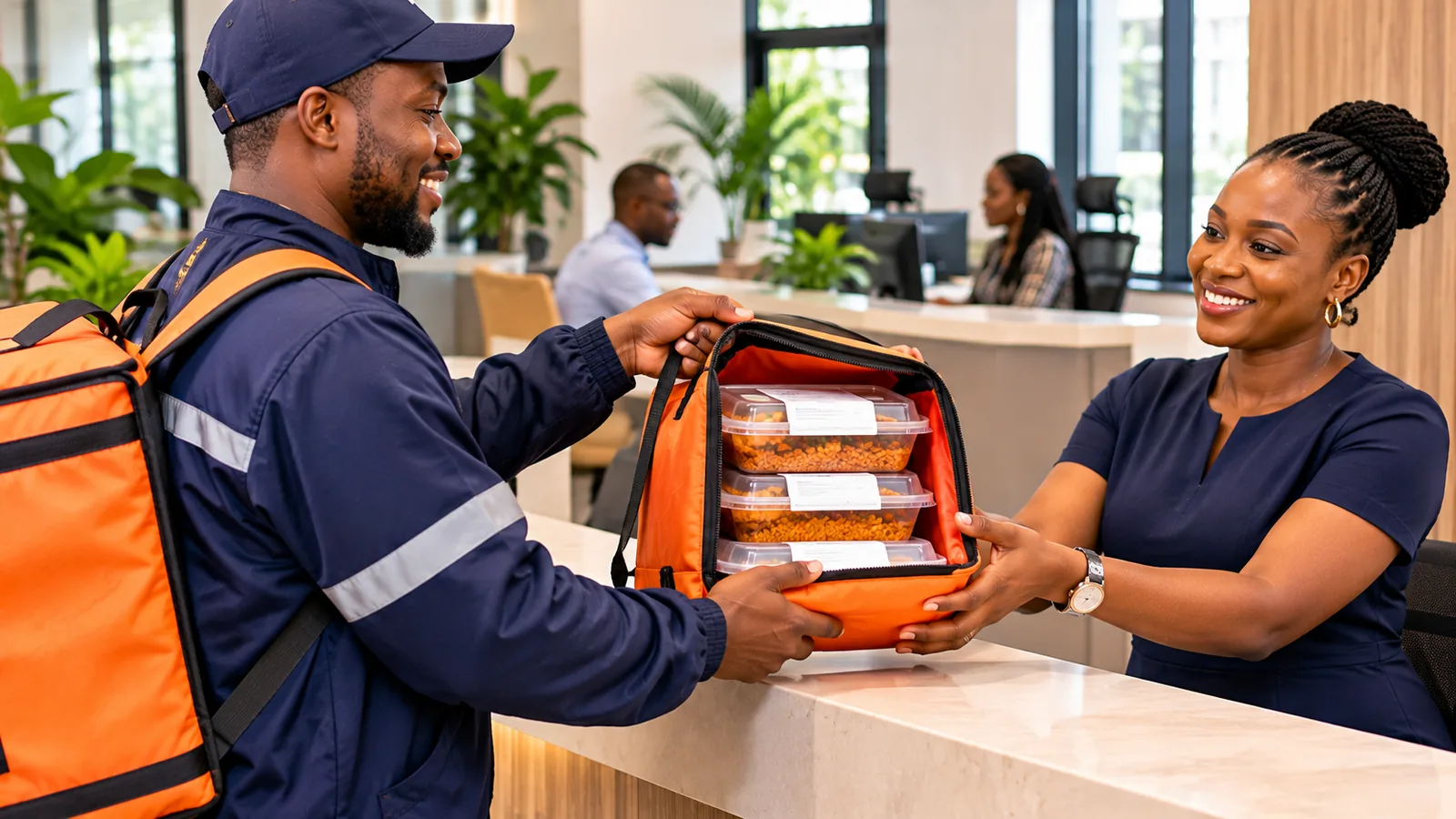
Regular customers are what make food delivery steady. The businesses that last tend to do a few simple things well. They keep a short menu they can cook the same way every day. They set an order cut-off time, such as 10am for lunch delivery, so they cook the right amount. And they sell to groups, not just individuals: office lunch arrangements, weekly meal prep for busy families, and catering for small events.
Consistency matters more than variety. A customer who got perfect jollof on Monday and dry rice on Wednesday won’t order on Friday.
When to take orders through a website
WhatsApp is enough at the start. It stops being enough when you are copying the same menu to dozens of people every morning, missing orders in long chats, or chasing payments after delivery. A simple ordering website with your menu, prices, delivery areas and online payment lets customers order without waiting for you, and gives you a record of every order and every regular customer.
Frequently Asked Questions
How much does it cost to start a food delivery business in Nigeria?
A lean start from home, cooking yourself with one rider, costs roughly ₦300,000 to ₦400,000 in most cities. Keep two to three months of running costs aside as well.
How much does Chowdeck charge vendors?
Chowdeck lists vendor commission tiers of 15%, 20% and 30%, with higher tiers giving a wider free-delivery area for its subscribers. Check the current terms before you sign up.
Do I need NAFDAC registration to sell food?
NAFDAC registration applies to packaged food sold through shops and supermarkets. Cooked meals delivered directly are usually regulated by your state’s environmental or public health authorities, so ask them about permits and food handler screening.
How should I price food for delivery?
Work out the cost of each plate, including ingredients, packaging, gas and delivery, before you set a price. Many food businesses try to keep ingredients to about a third of the selling price.
Is food delivery profitable in Nigeria?
It can be. In our illustration, a ₦2,500 plate leaves about ₦950 after ingredients, packaging, gas and delivery. Delivery app commissions and rising food prices can shrink that quickly, so review your prices every month.
A sensible first month
Choose three or four dishes you can cook well every day. Price each plate on paper, including packaging and delivery. Sell to people you know first, set a daily order cut-off, and keep a record of every order so you can see what sells. Register the business before you approach offices. When the orders outgrow your phone, we can help you set up online ordering.