


On this page 8 sections
Ask anyone who has rented a flat in Lagos about agents and you will hear the same complaints. An inspection fee paid to see a place that looked nothing like the photos. An agent who never picks up after the money is paid. Ten percent agency, ten percent legal, and nobody can explain what the second ten percent is for.
That reputation is exactly why an honest, organised real estate agency can do well. People still need help finding homes, landlords still need tenants, and developers still need buyers. They want someone they can trust with the money. This guide covers how agents earn, the registration rules now enforced in Lagos, what it costs to start and how to build the kind of trust that brings repeat clients. For how real estate compares with other ideas, see our guide to profitable businesses in Nigeria.
What a real estate agency actually does
Lettings means finding tenants for landlords and homes for tenants. It is the most common starting point, with steady demand and a fee on every deal.
Sales means selling houses, flats and land for owners and developers. Deals take longer and fall through more often, but the commission on one sale can equal many lettings.
Property management means collecting rent, handling repairs and dealing with tenants for landlords who don’t want to do it themselves, especially owners living abroad. It pays a regular fee every month, which makes it the most stable part of the business.
Short-let management means running furnished apartments for owners: listings, bookings, cleaning and guests. It is busier work, paid as a share of the booking income.
Many agencies start with lettings to build a reputation and cash flow, then add property management as landlords come to trust them.
How agents get paid, and what may change
By custom in Lagos, tenants have paid an agency fee of about 10% of the annual rent, often with a separate “legal” or “agreement” fee of another 10%. For sales, the seller usually pays commission, commonly 5% to 10% on properties below ₦100 million and less on more expensive ones. Property management fees are agreed with each landlord as a share of the rent collected.
That may change. A new Lagos tenancy bill would cap agents’ commission at 5% of annual rent, limit advance rent to one year for yearly tenancies, and require agents to pass money collected for a landlord on within seven working days. As of October 2026 it had passed second reading but was not yet law. If you are starting now, build a business that still works at 5%, because that is where the market is heading.
Register before you take a single fee
Lagos now requires every agent and real estate firm to register with LASRERA, the Lagos State Real Estate Regulatory Authority, and practising without it is an offence. The state has sealed an unregistered agent’s office in Ikorodu, and published guides put the penalty for not registering at up to ₦250,000 for individuals and ₦1 million for companies. The permit is renewed every year.
Register your business with CAC first. A business name works for a sole agent, but a limited company is better if you will manage landlords’ money or work with developers. Real estate businesses also need SCUML registration, because the EFCC treats them as designated non-financial businesses for anti-money-laundering purposes.
If you are a qualified estate surveyor and valuer, you also register with ESVARBON, and you cannot call yourself an estate surveyor without it. Outside Lagos, ask your state housing ministry which regulator applies, because the rules are not the same everywhere.
What it costs to start
Real estate needs less money than most businesses on our list. Our estimate is ₦300,000 to ₦1 million, covering registration, a reliable phone, transport for inspections, good photography of listings and some paid promotion. You do not need an office on day one, but you do need a professional address and somewhere to meet clients.
The real cost is time. Income only arrives when a deal closes, and your first deals may take months. Keep enough money aside to cover your own expenses until then.
Protect your clients, and yourself

Most of the fraud in Nigerian real estate comes down to the same few failures: selling land the seller doesn’t own, collecting rent for a flat that is already let, or taking money and disappearing. Avoiding them is what makes an agency worth trusting.
Get a written mandate from every landlord or seller before you advertise their property. For sales, ask for the title documents, whether a Certificate of Occupancy, Governor’s Consent or another title, and run a search at the state land registry before you take a buyer’s money. Issue a receipt for every payment, keep tenants’ and landlords’ money separate from your own, and pay landlords promptly. If the new Lagos rules pass, seven working days will be the legal limit.
Tell clients plainly what they are paying for. An agency that publishes its fees and explains them wins more referrals than one that adds charges at the end.
Finding listings and clients
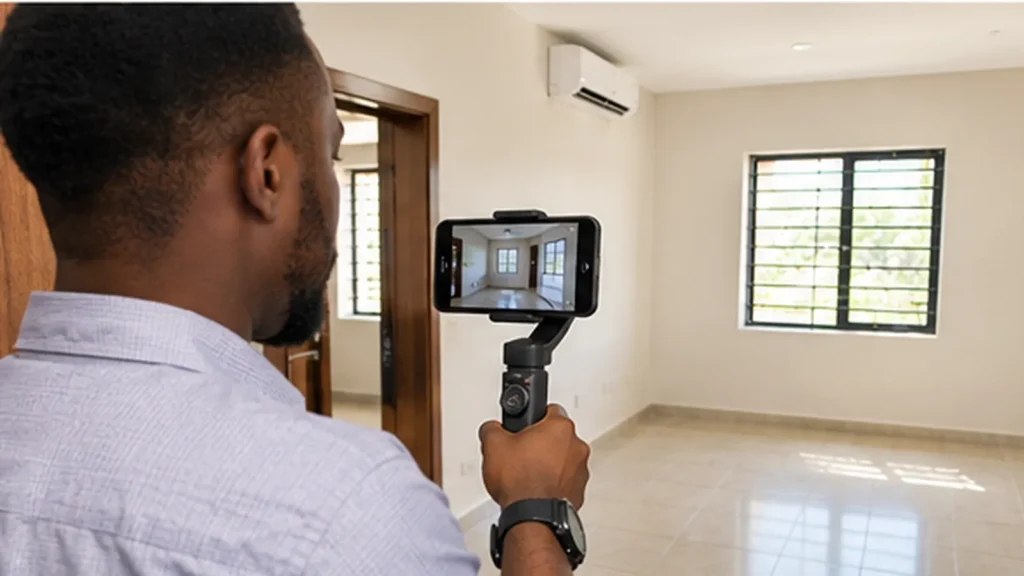
Listings come from relationships: landlords, developers, estate managers, other agents you share deals with, and owners abroad who need someone reliable at home. Clients come from referrals, listing websites, Instagram, WhatsApp status and estate groups.
Short video walk-throughs, accurate descriptions and honest photos do more for you than polished adverts, because they match what people see when they arrive. When your listings grow, a website with verified properties, clear fees and an enquiry form lets serious clients find you, and shows landlords you run a proper business.
Frequently Asked Questions
How do I start a real estate agency in Nigeria?
Register your business with CAC, register with SCUML, and in Lagos register with LASRERA before you collect any fee. Start with lettings in an area you know well, get written mandates from landlords, publish your fees and build referrals from your first deals.
How much does it cost to start a real estate agency in Nigeria?
By our estimate, about ₦300,000 to ₦1 million, covering registration, a reliable phone, transport for inspections, listing photography and some promotion. Keep extra money aside for your own expenses, because commission only arrives when a deal closes.
Do real estate agents need to register with LASRERA?
Yes, in Lagos. Every agent and real estate firm must register with the Lagos State Real Estate Regulatory Authority, and practising without registration is an offence. The permit is renewed every year. Other states have their own rules.
How much commission do real estate agents charge in Nigeria?
By custom in Lagos, tenants have paid about 10% of the annual rent as agency fee, often with a separate legal fee. Sales commission is commonly 5% to 10% on properties below ₦100 million. A Lagos tenancy bill would cap agents’ commission on rentals at 5%, but it was not yet law as of October 2026.
Do I need SCUML registration as a real estate agent?
Yes. The EFCC treats real estate businesses as designated non-financial businesses for anti-money-laundering purposes, so they need SCUML registration.
Your first three months
Register with CAC, SCUML and, in Lagos, LASRERA before you collect any fee. Choose one area you know well and focus on lettings there. Get written mandates from a handful of landlords, photograph their properties properly and publish your fees. Close your first few deals cleanly, ask happy clients for referrals, and offer property management to the landlords who trust you.