


On this page 11 sections
- Pick the kind of cleaning you want to be known for
- Or run it without doing the cleaning yourself
- What it takes to get started
- What clients pay, and what you keep
- How to quote a job without losing money
- Hiring cleaners people will let into their homes
- Winning contracts instead of chasing one-off jobs
- The paperwork clients will ask for
- Being found when someone needs a cleaner
- Frequently Asked Questions
- Your first ten jobs
A tenant moves out and leaves the flat in a state. A developer hands over a new duplex still covered in paint splashes and cement dust. A short-let host has guests arriving at 2pm and the last guests left at noon. In each case, someone needs a cleaner they can trust inside the property, and they need them on a specific day.
That is the business. Cleaning needs little capital, but it runs on reliability and trust more than most services, because clients are letting strangers into their homes and offices. This guide covers the kinds of cleaning work that pay, what to charge, what you keep, and how to move from one-off jobs to steady contracts. For how cleaning compares with other ideas, see our guide to profitable businesses in Nigeria.
Prices checked November 2026. Key prices link to their sources.
Pick the kind of cleaning you want to be known for
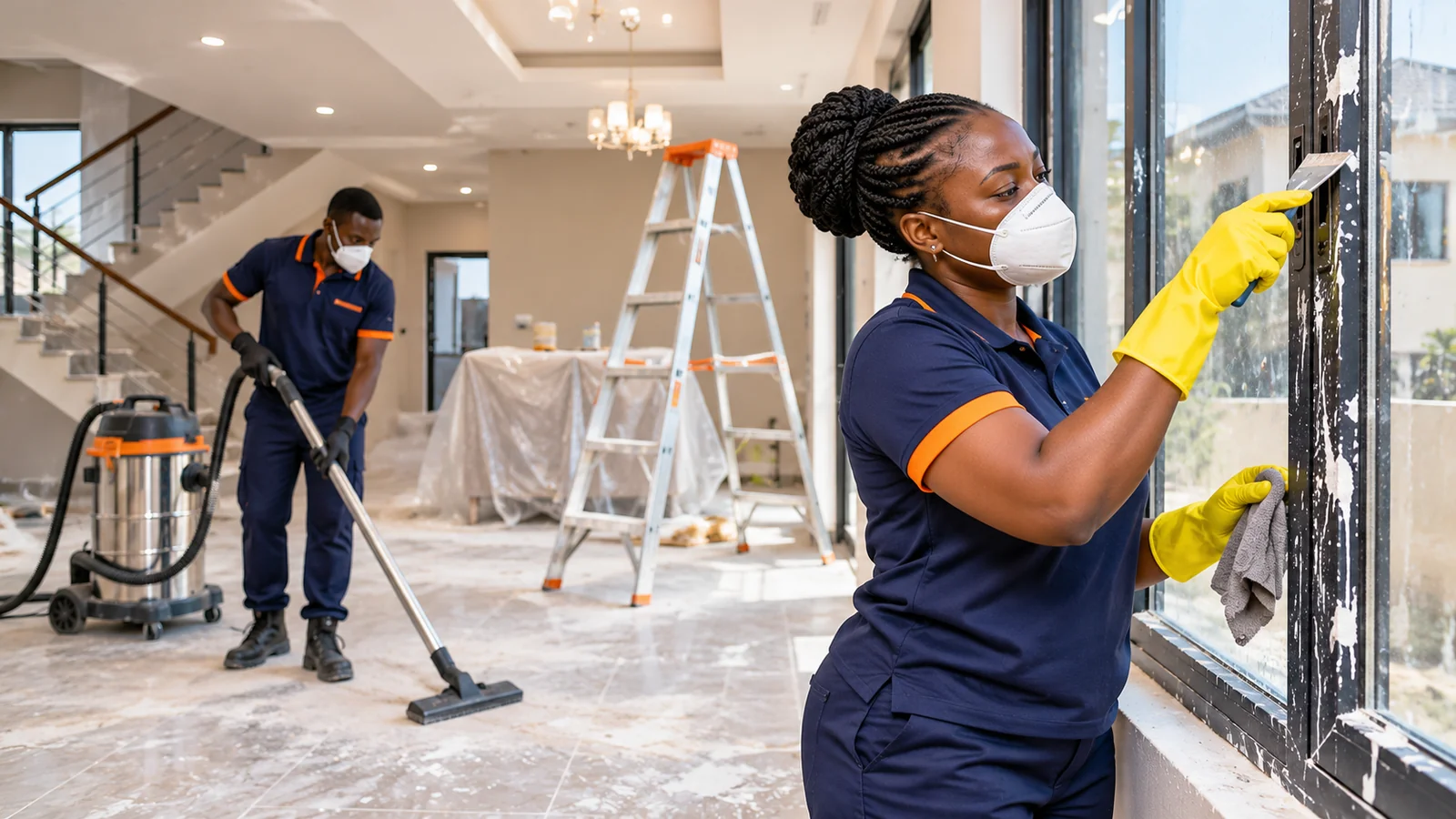
“We clean everything” is hard to sell. Clients remember the company that did their end-of-tenancy clean well, or the one their estate uses every week. These are the main kinds of work:
Regular home cleaning is weekly or fortnightly work for busy households. The fee per visit is modest, but the same client books you again and again.
Deep cleaning and end-of-tenancy cleaning pay more per job. Landlords, estate agents and property managers need them every time a tenant moves.
Post-construction cleaning removes paint, cement and dust after building or renovation work. It is hard, dirty work, which is why it pays better, and developers who like your work will call you for every handover.
Office and estate contracts are monthly arrangements to clean offices, shared areas or a whole estate. They are slower to win but give you predictable income.
Short-let turnovers are the newer opportunity. Hosts in Lagos and Abuja need apartments cleaned, linen changed and supplies restocked between guests, often at short notice.
Many cleaning companies add fumigation as a second service. If you do, ask your state environmental agency whether you need a permit, and follow the chemical label instructions exactly.
Or run it without doing the cleaning yourself
Some people in this business never pick up a mop. They focus on marketing and winning jobs, then pass each job to an experienced cleaning operator or a trusted team to carry out, and keep the difference between what the client pays and what the operator charges. It works a lot like drop servicing: you own the client relationship, and someone else does the work.
Here is a simple illustration. A client agrees to pay you ₦50,000 for a deep clean. Your operator charges ₦40,000 to do it, including their own chemicals and transport. You keep ₦10,000 for finding the job, inspecting it and making sure it is done well. Your cut per job is smaller than if you cleaned yourself, but you need very little equipment, and you can handle many more jobs at once.
The risk is that your name is on work you didn’t do. If the operator’s team arrives late, breaks something or does a poor job, the client blames you. A few things protect you:
- Work with a small number of operators whose work you have seen in person, not whoever is cheapest.
- Inspect or get photos and videos of the property yourself before you quote, so your price matches the real job.
- Put the agreement in writing: what the operator will do, the price, timing, who pays for breakages, and that they won’t take your client directly.
- Collect payment from the client yourself, and pay the operator after you have checked the finished job.
This model lives or dies on marketing, so it suits people who are good at finding clients more than people who enjoy the cleaning itself. Many start this way and hire their own cleaners once the jobs are steady.
What it takes to get started
You can start small. Our estimate for a small residential start is ₦250,000 to ₦500,000, covering a wet and dry vacuum cleaner, mops and buckets, scrubbing brushes, microfibre cloths, cleaning chemicals, branded uniforms and transport to jobs. Get supplier quotes before you buy, and buy commercial-grade items for the things you use every day. A cheap vacuum that dies after two post-construction jobs is not a saving.
Staff are your main running cost. With the national minimum wage at ₦70,000, two full-time cleaners cost at least ₦140,000 a month. As an employer, you should also contribute 1% of your monthly payroll to the NSITF under the Employee’s Compensation Act, which covers staff injured at work. Ask an insurer about public liability cover too, because sooner or later a cleaner will break something expensive in a client’s home.
What clients pay, and what you keep
In Lagos, deep cleaning a three-bedroom flat typically costs about ₦40,000 to ₦51,000, and post-construction cleaning of the same flat about ₦50,000 to ₦60,000, with Island jobs usually priced higher than Mainland ones. Prices outside Lagos are usually lower, so check what local firms charge.
Here is a rough illustration. Say a team of two does a deep clean for ₦45,000. Allow ₦10,000 for chemicals and consumables and ₦5,000 for your cleaners’ transport, and you have about ₦30,000 towards wages and everything else. Do 15 jobs like that in a month and you bring in ₦675,000. After ₦140,000 for two cleaners, ₦150,000 for chemicals and ₦75,000 for transport, about ₦310,000 is left before marketing, equipment replacement and your own pay.
Now do six jobs instead of fifteen. Your cleaners still cost ₦140,000, and you are left with roughly ₦40,000. That gap is why contracts matter so much in this business.
How to quote a job without losing money
A Lagos cleaning operator we spoke to had one main warning: clients will often describe a job as “just normal cleaning”, and you find something else when you arrive. Visit the property before you quote, especially for bigger jobs. Where a visit isn’t practical, ask for recent photos and clear videos of every room, bathroom and visitors’ toilet. Confirm whether the client wants a routine clean, a deep clean or a post-construction clean, and take your own photos at the inspection so you can compare the finished job against them.
Two flats with the same number of bedrooms can be completely different jobs. One has been lived in and needs a normal clean. The other has just been finished, with paint and cement on the tiles, glass and doors. Size tells you how many cleaners and how many hours you need. The condition tells you how much effort and how many products the job will take. Price for both. Heavily stained bathrooms are where new cleaners most often underestimate, because stubborn stains can use up a surprising amount of product in a small space.
Then cost the job line by line:
- Labour: how many cleaners, and for how long.
- Products: the right chemical for each surface and roughly how much of each, rather than one fixed allowance for every job.
- Equipment and access: ladders for high windows and stairwells, and anything heavy you need to move to the site.
- Transport: every cleaner’s journey, there and back, plus the equipment.
- Overheads and profit: your share of phone, marketing, equipment wear and your own pay, on top of the job costs.
Transport is the line new cleaning businesses most often get wrong. The operator’s advice was to count your cleaners’ fares from where they live to your meeting point or the site, then on to the job and back home, not just your own trip. Agree with your cleaners beforehand whether transport is paid separately or included in their daily rate.
Hiring cleaners people will let into their homes

Clients judge your business by the person who knocks on their door. Take references and a guarantor for every cleaner, keep copies of their ID, and give them a uniform and a company ID card so clients know who is coming.
Train everyone on the same checklist for each type of job, so a deep clean from your company looks the same whoever does it. Send the checklist to the client after the job. And pay your cleaners on time. Good cleaners have options, and the ones who stay are the ones who learn how your clients like things done.
Winning contracts instead of chasing one-off jobs
One-off jobs keep you busy. Contracts keep you in business. The people who can give you regular work are property managers, estate facility managers, estate agents handling tenancies, developers finishing projects, short-let hosts and office managers.
Approach them with a clear proposal: what you clean, how often, how long it takes, what it costs per month and what happens if they are not satisfied. Offer a paid trial clean so they can see your standard before they commit. Then deliver it the same way every time, because facility managers talk to each other.
The paperwork clients will ask for
Offices, estates and companies usually want to deal with a registered business, and many will ask for an invoice, a TIN and a business bank account before they sign a contract. A business name costs ₦21,000 in CAC fees plus ₦700 in CAC AI service charges, as our CAC fees guide explains. If you want an agent to handle it, Qrafteq’s standard Business Name package is ₦35,000, including CAC’s charges, and promotional offers may apply: see current pricing and register. Once it is registered, you can open a business bank account.
Being found when someone needs a cleaner
People usually look for cleaners when they need one urgently, and they search on Google or ask in estate WhatsApp groups. A Google Business Profile with genuine reviews, clear prices for common jobs and a simple way to request a quote will win you more work than a flyer. Before-and-after photos, taken with the client’s permission, show your standard better than any description.
Once enquiries start coming in, a website that lets clients choose the service, see a starting price and book a slot saves you hours on the phone each week.
Frequently Asked Questions
How much does it cost to start a cleaning business in Nigeria?
Our estimate for a small residential start is ₦250,000 to ₦500,000 for equipment, chemicals, uniforms and transport. Staff are the main running cost: two cleaners at the minimum wage cost at least ₦140,000 a month.
How much do cleaning companies charge in Lagos?
Deep cleaning a three-bedroom flat in Lagos typically costs about ₦40,000 to ₦51,000, and post-construction cleaning of the same flat about ₦50,000 to ₦60,000. Island jobs are usually priced higher than Mainland ones.
Is a cleaning business profitable in Nigeria?
It can be if your team stays busy. In our illustration, 15 deep cleans a month leave about ₦310,000 before marketing, equipment and your own pay, but six jobs leave only about ₦40,000. Regular contracts make the difference.
Do I need a licence to start a cleaning business?
You should register with CAC, because offices and estates usually want an invoice from a registered business. If you offer fumigation, ask your state environmental agency whether you need a permit.
How do I get cleaning contracts in Nigeria?
Approach property managers, estate facility managers, estate agents, developers, short-let hosts and office managers with a clear proposal, and offer a paid trial clean so they can see your standard first.
Your first ten jobs
Choose one or two services to start with. If you can, spend a few days on jobs with an experienced cleaning operator first, to see how they inspect a property, choose products and plan the team. Buy commercial-grade equipment for the work you will do most, and hire one or two cleaners you have vetted properly. Do your first jobs for people who will give you honest reviews and referrals, and photograph your work with permission. Register the business before you approach estates and offices, then use those first ten jobs to win your first contract.